Showing posts with label Stanley Kubrick. Show all posts

Monday, December 5, 2016

The Kubrick Paper

Your film analysis papers need to consist of a scholarly analysis of one or more of the major interpretative theories concerning the film, The Shining. Feel free to combine several.

The theories are as follows:

  • The Native American Genocide 
  • The Holocaust

  • Greek Mythology: Theseus, the Minotaur, and the Labyrinth
  • Apollo 11
  • A Parody of Gothic Horror (The easiest!)
  • Fairy Tales
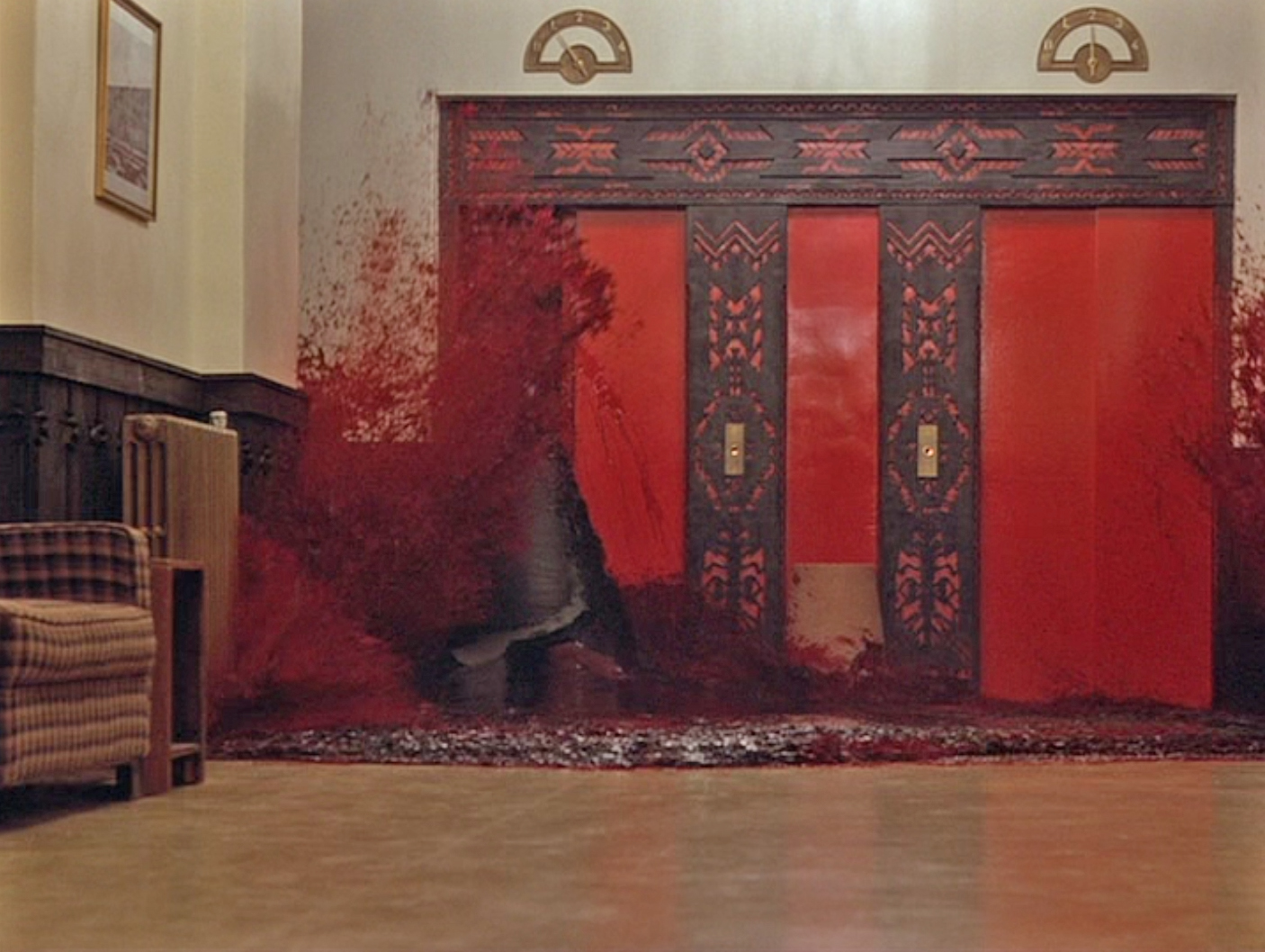
  • "The Blood on Which Nations Are Built": A Judgment on Humanity
Outline
I. Intro
   A. Introduction/explanation of your theory
   B. Thesis: a complex sentence indicating specifically what your paper will prove
II. Body 1 
   A. Quote or idea from a source
   B. Analysis of the aforementioned idea supported by specific references to the film
III. Body 2
   A. Quote or idea from a source
   B. Analysis of the aforementioned idea supported by specific references to the film
IV. Body 3
   A. Quote or idea from a source
   B. Analysis of the aforementioned idea supported by specific references to the film
V. Conclusion - Revisit the thesis and the main ideas explored in the paper
VI. Works Cited - Appears on a separate page; does not count towards the overall length

Sources
Format/Citation
  • The paper must be properly MLA formatted. It must contain multiple in-text citations, and the works cited must be properly formatted.
  • If there are no in-text citations and no works cited page, the paper is technically plagiarized. Anticipate an automatic failure.

The best source of information regarding MLA formatting is the Online Writing Lab of Purdue University: The OWL.

We are citing a chapter from the book, On Kubrick. The proper MLA works cited entry for the book would appear as follows:

Naremore, James. "Horrorshow." On Kubrick. London: British Film Institute, 2007. Print.

To use information from the book in the essay, you must use an in-text citation. There are two ways to do this correctly.
  • Firstly, you may opt to simply mention the title of the book and the author. Then, you simply need to include the page number in parenthesis.
In On Kubrick, the author, James Naremore, postulates that The Shining is a Freudian horror film that portrays Jack Torrance as a terrifying, nightmarish father figure (287).

  • Secondly, you may simply include a quote or idea from the excerpt without mentioning the author or the title. In this case, the parenthetical in-text citation must include the author's last name and a page number.
The Shining is a Freudian horror film that portrays Jack Torrance as a terrifying, nightmarish father figure (Naremore 287).

Due Date/Requirements

The paper must be submitted via Google Classroom!
  • Size 12, Times New Roman font
  • Double-spaced
  • No cover page!
  • MLA header/page numbers
  • 1" margins
  • No hanging indents
  • Complex thesis statement
  • At least 3 in-text citations
  • Multiple specific references to the film itself
  • 3 scholarly sources all of which must be used in the body of the paper
  • 3-5 pages; the works cited page gets its own page; it does not count towards the overall length


Thursday, September 24, 2015

Cracking The Shining Code


You all will be assigned a chapter of Rob Ager's 21 part analysis of The Shining: 


Read your assigned section, and note the 10 most interesting facts and concepts.

  • Create a 10 slide Google Slides presentation.
  • Each slide must contain text and a relevant image or still from the film.
    • Do not overload slides with text; rather, use bullet points.
  • The last slide should be your explanation of what you feel is Kubrick's directorial style - use visual examples with what you've seen along with your bullet points

Your completed presentation must be shared with me (eclark@gehrhsd.net) by the end of class on Tuesday, September 29th to receive full credit. Be prepared to present on Wednesday, Sept. 30th.


Thursday, September 10, 2015

2001: Defy Holy Wood

Dr. Floyd Heywood
Dr. Heywood is the chairman of the National Committee for Aeronautics.

Floyd Heywood.

Defy Holy Wood?

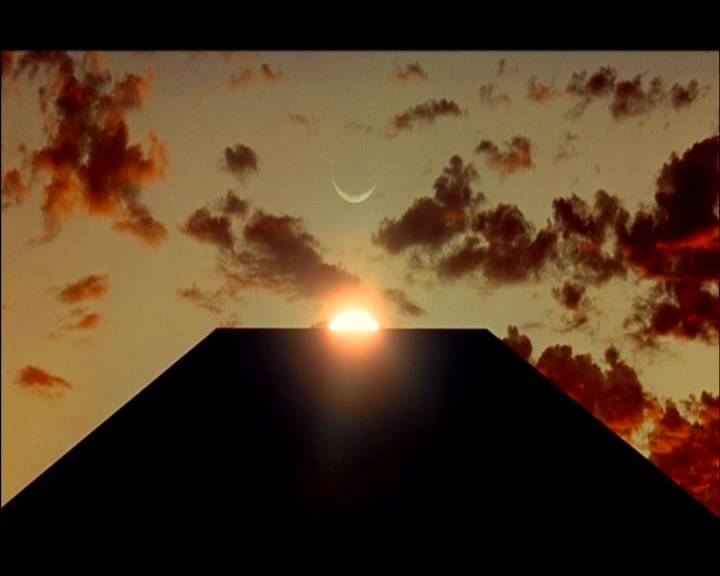
The Monolith: a metaphor for the film screen?


Is the film a call to arms?

Is Kubrick calling upon the enlightened to rise up and seize power back from the elite?


Something is going on in this film.

Check out the poster:

We must interpret this film beyond its aesthetic beauty.


Tuesday, April 8, 2014

Tuesday, February 3, 2009

Dr. Strangelove I Presume!!


Since we are now viewing Dr. Strangelove, here's some trivia about the film (thanks to our friends at www.imdb.com):


  • Peter Sellers was paid $1,000,000 for his work on the film (five-ninths of the film's budget). Kubrick famously quipped "I got three for the price of six".

  • Peter Sellers improvised much of his dialog during filming!

  • The original ending was supposed to be a pie fight in the War Room!

  • Dr. Strangelove apparently suffers from agonistic apraxia (also known as "alien hand syndrome".

  • One version of the script featured all of the action being observed by aliens from outer space!

  • Number 3 in the American Film Institute's list of 100 greatest comedies

  • President Muffley (Peter Sellers) was patterned after Adlai Stevenson.

  • General Ripper's paranoia about water fluoridation is based on a conspiracy theory by the John Birch Society, which was founded in 1958 and was prominent in conservative politics for a short time in the early 1960s!

  • Gen. Buck Turgidson (George C. Scott) was patterned after Chairman of the Joint Chiefs of Staff Gen. Curtis LeMay, who was renowned for his extreme anti-Communist views and who once stated that he would not be afraid to start a nuclear war with the Soviet Union if he was elected President!

Thursday, October 30, 2008

Kubrick... genius or GENIUS?

As a quick response to Alexander Peralejo's blog, I would just like to point out another film that everyone in the Oakcrest Film Institute should (definitely) watch, and then quickly add to their 'Movies' list on Facebook called, '2001: A Space Odyssey'. This Academy-Award winning film is not only mind blowing, with its spectacular visual effects and brilliantly-written screenplay, but it can also act as a catalyst for your inner-most thoughts... with so many undetermined meanings, answers, and thought provoking questions, it is a wonder why any of Kubrick's films have yet to be brought up for discussion in or out of class.

Stanley Kubrick is the mastermind-of-a-director who also wrote and produced films such as 'A Clockwork Orange', 'The Shining', 'Full Metal Jacket', and 'Dr. Strangelove or: How I Learned to Stop Worrying and Love the Bomb' (and some other joint with Tom Cruise, you know...). So I advise anyone who has not seen his movies to drive to Blockbuster (yes, at 12:06 am) and rent them! And please believe me when I say that they are worth every minute of your time! They will NOT disappoint. Thank you and goodnight.

Here is the opening to '2001': http://www.youtube.com/watch?v=cWnmCu3U09w